
Why Is My Water Heater Making Popping or Rumbling Sounds?
If your water heater has started popping, rumbling, or crackling every time it runs, the tank is trying to tell you something. It is not haunted, and it is rarely on the verge of exploding. In almost every case, the culprit is sediment, and the noise is the sound of that sediment interfering with how the heater does its job.
The good news is that a rumbling tank is one of the most diagnosable problems in a home. Once you understand what the sound actually is, you can tell whether you are looking at a quick fix, a maintenance habit you have skipped for a few years, or a tank that has reached the end of its useful life.
What Sediment Is and Where It Comes From
Every gallon of water that enters your heater carries dissolved minerals, mostly calcium and magnesium. This is what makes water "hard," and it is a fact of life in areas with hard water. When cold water hits the hot interior of the tank, those minerals fall out of solution and drift to the bottom, where they settle into a gritty layer.
This does not happen overnight. Sediment accumulates over the years, which is why a brand new heater runs silently and a ten-year-old one that has never been drained can sound like a coffee pot. The age of the unit is one of the first things a plumber asks about, because the volume of buildup tends to track with how long the tank has been in service and how hard the local water is.
The layer starts as loose sand-like grit. Left alone, heat and time bake it into a harder crust that clings to the steel bottom of the tank. That difference, loose versus hardened, turns out to matter a great deal for fixing the noise.
Why the Tank Actually Makes Noise
Here is the mechanism, because it explains everything else. On a gas water heater, the burner sits underneath the tank and heats the steel floor. When sediment has piled up on that floor, a thin film of water gets trapped between the sediment particles and the hot steel below them. As the burner fires, the trapped water heats past boiling and flashes into steam. The steam bubbles have to escape upward through the sediment, and as they force their way out, they pop, snap, and rumble.
If you have ever listened to a kettle just before it whistles, you already know the sound. The rumble in a kettle is water boiling against the metal and bubbles collapsing and escaping. Your water heater is doing the exact same thing, only the "lid" holding the noise in is a layer of mineral sediment instead of a kettle spout. That is the one comparison worth keeping in your head, because it maps perfectly onto what is physically happening inside the tank.
Electric water heaters work differently. There is no burner underneath, so the popping mechanism is not identical. Instead, an electric unit heats the water with elements that project into the tank from the side, usually one near the top and one near the bottom. Sediment builds up around and over that lower element. When it does, the element is trying to heat water through an insulating blanket of minerals, which changes the character of the sound and, more importantly, stresses the element itself.
Why a Noisy Heater Is Worth Taking Seriously
The sound is harmless. The condition causing it is not, and that is the part homeowners tend to miss.
First, efficiency. Sediment is an insulator. On a gas unit, it sits between the flame and the water, so the burner has to run longer and hotter to push heat through the mineral layer into the water above. That means more gas is burned for the same hot shower, which shows up on the bill. On an electric, a buried lower element fights the same insulating effect.
Second, and more important, is what that extra heat does to the tank. When sediment forces the burner to overheat the steel floor, the metal runs hotter than it was designed to. Most tanks are protected on the inside by a thin glass lining that keeps water off the bare steel. Chronic overheating stresses that lining, and once it cracks or flakes, water reaches the steel and corrosion begins. A tank that overheats its bottom year after year is moving toward a leak, and a leaking water heater is not a repair; it is a replacement plus whatever water damage it has left behind.
Third, on electric heaters specifically, a lower element buried in sediment can overheat and burn out. When that happens, you lose half your heating capacity, hot water runs out faster than it used to, and the element has to be replaced.
Ruling Out the Other Noises First
Not every sound from the water heater area is sediment. Before you commit to a diagnosis, it helps to separate the four common noises because they point to different problems.
Sediment popping comes from the bottom of the tank and happens while the heater is actively heating, right after a big hot water draw when the burner or element kicks on. It is a low, rolling rumble with sharp pops mixed in.
A ticking or knocking sound that seems to come from the pipes rather than the tank itself is usually an expansion. As hot water moves through a metal pipe, the pipe expands and rubs against the framing or a strap, producing a rhythmic tick. That is a plumbing contact issue, not a tank problem, and it comes and goes with water flow rather than with the burner.
A steady hiss or a sound of water escaping near the top of the tank deserves immediate attention. The temperature and pressure relief valve, the safety fitting with a lever near the top or side, is designed to release if pressure or temperature climbs too high. Hissing there can mean the valve is weeping because system pressure is too high or the valve is failing. That is a pressure and safety issue, and it is a reason to call a professional rather than to keep flushing.
Finally, a high whining or kettling that seems centered on an element rather than the tank floor points to scale on the heating element itself, common on electric units, where mineral crust bonds directly to the element and sings as it heats.
Getting the noise sorted into the right category saves you from flushing a tank when the real issue is a pipe rubbing a joist.
How to Quiet a Sediment-Noisy Tank
Once you have confirmed the rumble is coming from the bottom of the tank during heating, the fix follows a clear order.
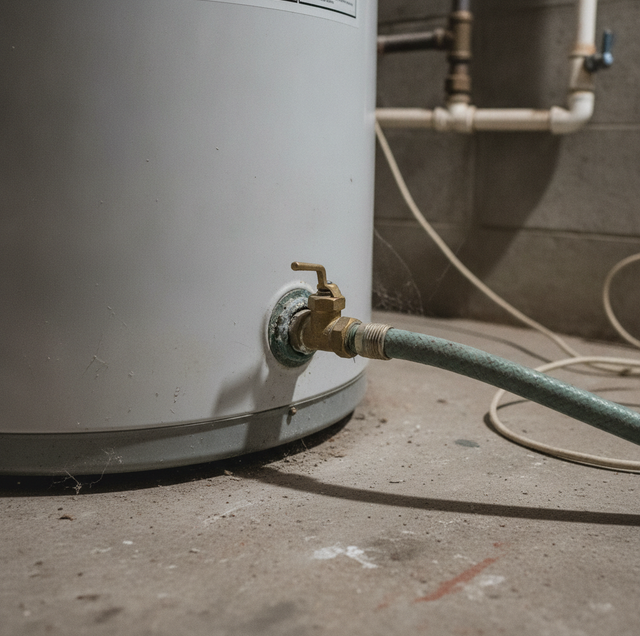
The first move is to flush the tank. Draining the water out through the drain valve at the base carries loose sediment with it, and on a heater that has only a moderate, still-loose layer, a thorough flush often quiets the noise noticeably. This is also the maintenance step that, done on a schedule, prevents the buildup from ever getting bad enough to make noise in the first place.
Flushing is not risk-free, which is worth being honest about. The water coming out is scalding hot unless you let the tank cool first, and the valves involved are old and sometimes brittle. On a gas unit, you have a live burner and a gas connection nearby; on an electric unit, you have wiring and live elements. If you are not comfortable working around all of that, or the drain valve looks corroded, this is a reasonable job to hand to a plumber rather than risk a burn or a stuck-open valve.
If a flush does not fully clear the noise, that tells you something specific: the sediment has likely hardened into a crust that will not rinse out through the drain valve. At that point, you are usually dealing with an older heater, and continuing to fight the noise makes less sense than planning for a replacement, especially if the tank is already past the typical service life for your area.
To slow future buildup, a water softener or conditioner is the real long-term answer in hard-water areas. By reducing the mineral load in the water before it ever reaches the heater, a softener slows how fast sediment settles, which keeps a new or recently serviced tank quieter and extends the time between flushes.
On an electric heater where sediment has already cooked a lower element to failure, the element itself needs to be replaced. That is work involving live electrical connections and draining the tank, and it is a job for a licensed plumber or electrician rather than a weekend project.
When to Stop Troubleshooting and Call
Some situations move past DIY entirely. Anything involving the gas connection or burner assembly, any electrical element work, a T&P valve that is hissing or weeping, or a tank old enough that replacement is on the table, all warrant a professional. The same is true if you flush and the noise persists, or if you are simply not comfortable draining scalding water safely. A plumber can confirm whether the sediment is loose or hardened, check the condition of the tank and its safety fittings, and tell you honestly whether you are looking at a service call or a new heater.