
Why Is My Shower Hot One Minute and Cold the Next?
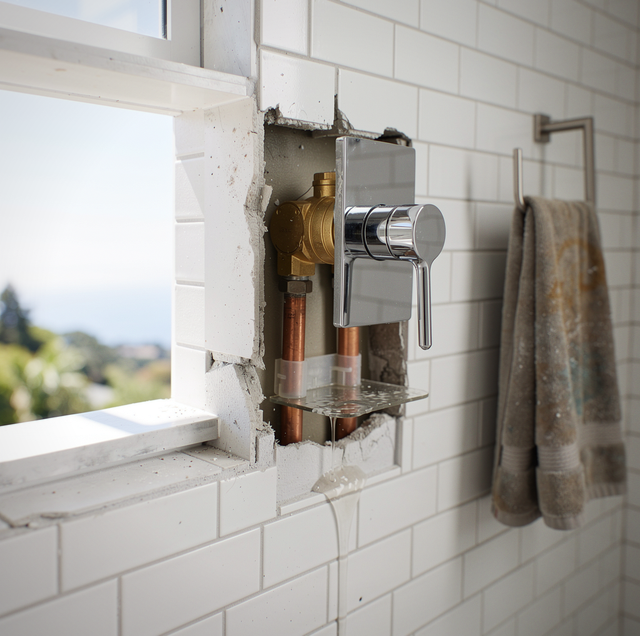
A shower that swings from comfortable to scalding and back to cold within the same five minutes isn't a fluke of bad luck. Somewhere between the wall and the showerhead, a part that's supposed to hold the hot-to-cold ratio steady has stopped doing its job, or something elsewhere in the house is stealing pressure from the line feeding that shower. Either way, the fix starts with understanding what's actually supposed to happen every time that handle gets turned.
How A Shower Is Supposed To Balance Temperature
Behind the shower wall sits a mixing valve, the single unit that blends hot and cold water before it ever reaches the showerhead. Turn the handle, and it isn't just opening a tap; it's adjusting the ratio of hot water to cold water flowing into a shared chamber inside the valve body. Get that ratio wrong, and the result is either water too hot to stand under or too cold to bother with.
Most valves installed over the past few decades are pressure-balancing or thermostatic by design, which means they're built to correct for exactly the kind of interference that causes hot-cold swings. A pressure-balancing valve uses a sliding disc or piston that shifts automatically when the pressure on one side, hot or cold, drops relative to the other. If the cold pressure suddenly falls, the piston moves to cut back the hot side as well, keeping the blended temperature roughly where it was even though total flow drops momentarily. A thermostatic valve goes a step further, using a wax or metal element that expands and contracts with actual water temperature rather than just pressure, holding the output within a narrow range regardless of what's happening upstream.
Both designs rely on internal parts moving smoothly and consistently: a disc that slides freely in its bore, seals that hold their shape, springs that return to position every time. When any of those parts wears, sticks, or gets fouled with mineral debris, the valve stops correcting for pressure shifts the way it's built to, and the swings a homeowner feels in the shower start showing up as the valve's balancing act fails partway through.
The Cartridge: Where Most Fluctuation Problems Start
Inside that valve body sits a cartridge, a self-contained unit that houses the moving parts doing the actual mixing. Cartridges are built from rubber seals, plastic or brass components, and sometimes small springs, and they're designed to be the part that wears out and gets replaced rather than the valve body itself. Every time the handle turns, the cartridge's internal ports open and close to adjust the hot-cold ratio.
Over time, the rubber seals inside a cartridge harden, crack, or become unevenly compressed. Once that happens, the ports don't seal the way they did when new, and water bleeds past when it shouldn't, letting more hot or cold through than the handle position calls for. A cartridge in that state won't fail all at once; it fails in fits, holding steady for a while and then drifting as a rubber seal shifts slightly with heat or pressure changes during a shower. That intermittent, unpredictable pattern, rather than a temperature that's simply wrong every single time, is one of the clearest signs the cartridge itself is the part wearing out.
Sediment adds to the same problem. Mineral particles carried in the water supply settle in the cartridge's small internal passages, and over time, that buildup can partially block a port or cause the cartridge to bind slightly as it moves. A cartridge that's binding rather than sliding smoothly will sometimes hang up mid-adjustment, holding an extreme temperature for a beat before catching up, which reads to the person in the shower as a sudden hot or cold spike.
When Another Fixture Is The Real Cause
Not every temperature swing traces back to a worn part. A cold water supply line usually branches to serve several fixtures at once, and every fixture drawing from the same branch shares the pressure. When a toilet runs a refill cycle after a flush, a washing machine fills, or a dishwasher draws water mid-cycle, the cold side of that shared line briefly loses some pressure to the fixture pulling harder. A pressure-balancing or thermostatic valve is designed to compensate for that dip, but an aging valve, one that's already lost some of its corrective ability, may only partially keep up, letting the shower run noticeably hotter for a few seconds until the competing fixture finishes its cycle.
This pattern has a distinct signature: the temperature swing lines up with something else in the house turning on. It happens when someone flushes a toilet down the hall, starts the dishwasher, or runs a load of laundry, and it settles back down once that fixture stops drawing water. A shower that only misbehaves in that specific circumstance is pointing at shared-line pressure competition rather than a valve that's failed outright, though a valve in good working order should absorb most of that dip without the person in the shower noticing much of anything.
Narrowing Down Which One It Is
The single most useful thing a homeowner can do is pay attention to when the swings happen. Two patterns point in two different directions, and figuring out which one matches what's actually happening saves a lot of guesswork.
Fixture-triggered swings: The temperature shifts only when another fixture runs elsewhere in the house, such as a toilet flush, a washing machine filling, or a dishwasher cycle starting. The shower runs fine otherwise, and the swing tracks with that other fixture's water demand almost exactly. This points to pressure competition on a shared line, which a healthy valve should mostly absorb, suggesting the valve may be starting to lose some of its balancing capacity even if it isn't fully worn out.
Random, unprompted swings: The temperature drifts hot or cold with no other fixture running anywhere in the house, sometimes during a shower where nothing else is drawing water at all. This pattern points much more directly to the cartridge or valve itself: worn seals, sediment buildup, or a sticking piston that isn't holding its position reliably despite changes in outside pressure.
A homeowner can test the first pattern directly: run the shower, then have someone flush a toilet or start the dishwasher and watch what happens to the temperature. A noticeable but brief swing that recovers within a few seconds is a shared-line pressure event working roughly as expected. A swing that's severe, slow to recover, or happens even with nothing else running points toward the valve.
Simple Checks Before Calling For Service
A few things are worth ruling out before assuming the worst. Check whether the shower has an anti-scald or temperature-limit stop, a small adjustable ring or tab built into many valves that caps how far the handle can turn toward hot. If that stop has slipped or was set incorrectly during an earlier repair, it can create the sensation of the valve overcorrecting even though the cartridge itself is fine.
It's also worth noting whether the issue is isolated to one shower or occurs at multiple fixtures throughout the house. A single shower with a temperature problem usually means that specific valve or cartridge. Temperature or pressure issues showing up at several fixtures at once point to something upstream, most often a water heater that's struggling to keep up with demand or a whole-house pressure regulator that isn't holding steady.
Water heater sizing and recovery time also deserve a mention, even though they're less common causes of true hot-cold swinging mid-shower. A water heater that's undersized for the household or slow to recover between draws can run out of hot water partway through a long shower, which feels like a gradual fade from warm to cool rather than the sharper swings a failing cartridge produces. If the pattern is a slow drift toward cold as the shower goes on, especially after someone else has already showered recently, recovery capacity is a more likely explanation than a valve problem. A sharp, sudden swing that happens repeatedly and unpredictably, with plenty of hot water available elsewhere in the house, points back toward the valve and cartridge instead.
When To Call A Plumber
A cartridge that's aged out doesn't usually need the whole valve replaced. In most cases, a plumber can shut off the supply to that fixture, pull the old cartridge, and install a new one matched to the valve's brand and model, restoring the pressure-balancing or thermostatic function the valve was originally built to provide. That's a contained repair, generally handled in a single visit, and it's the most common fix for the intermittent, unprompted swings described above.
A bigger issue is worth suspecting when the problem isn't limited to one shower valve. If multiple fixtures around the house show pressure or temperature inconsistency, if the anti-scald stop has been reset and the swings persist anyway, or if a plumber finds significant mineral buildup coating the inside of the valve body itself rather than just the cartridge, the valve body may need replacing rather than just the cartridge inside it. That's a larger job since it usually means opening the wall around the valve, but it's far less common than a plain cartridge swap.
It's also worth having a plumber take a look if the swings started right after a home's water pressure changed for some other reason, after a new pressure regulator, after recent plumbing work elsewhere in the house, or after a noticeable jump in overall water pressure. A valve that handled the house's old pressure levels fine can start struggling when the surrounding pressure environment shifts, even without the cartridge itself failing. A plumber can check the valve's rated pressure range against what the house is actually delivering and confirm whether the fix is a cartridge, a pressure adjustment, or something else in the system.
Frequently Asked Questions
Can I replace a shower cartridge myself?
How long does a shower cartridge usually last before it needs replacing?
Is a sudden temperature swing dangerous, not just annoying?
Why does the problem seem worse in the morning than at other times of day?
Does turning down the water heater's temperature setting fix the swinging?
Can a whole-house pressure problem cause this even if the shower valve is fine?
A shower that swings between hot and cold is telling you something specific about which part of the system is struggling to keep up, whether that's a cartridge that's finally worn through after years of use or a shared line that's asking more of an aging valve than it can still deliver. Paying attention to when it happens turns a frustrating guessing game into a much shorter conversation with whoever ends up fixing it.
Schedule a shower valve inspection — get temperature swings diagnosed and fixed before a scald risk becomes a bigger repair. Much Better Plumbing serves Las Vegas and Clark County. Call (702) 996-4760.