
Smell Gas Near a Stove or Furnace? What to Do Right Now
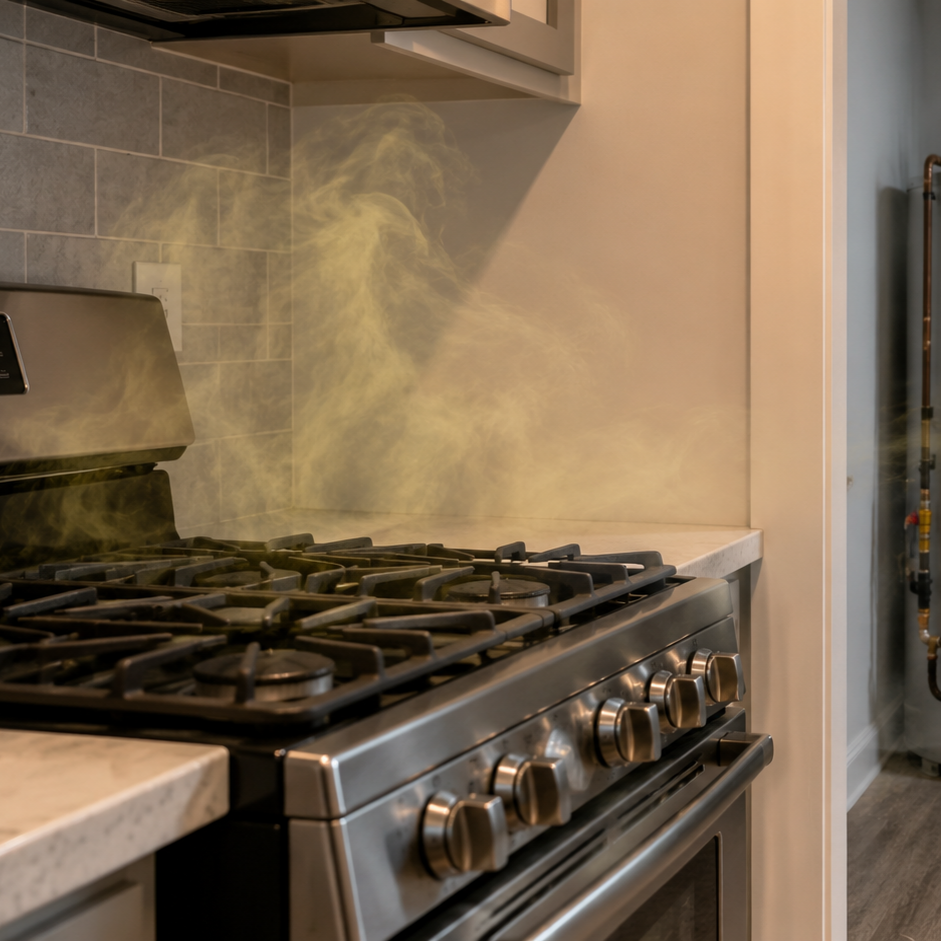
The smell of gas in your home is one of those situations where knowing exactly what to do — and what not to do — matters enormously. Natural gas leaks pose a real fire and explosion hazard, so the right response is fast, simple, and focused on getting everyone to safety. Here's what to do right now if you smell gas near your stove, furnace, or anywhere in the house.
Recognize the Smell
Natural gas is naturally odorless, so gas companies add a distinctive smell — described as rotten eggs or sulfur — specifically so leaks can be detected. If you notice a rotten-egg or sulfur odor near your stove, furnace, water heater, or anywhere in your home, treat it as a potential gas leak. You might also hear a hissing sound near a gas appliance or line. Trust the smell: it's there as a warning, and a gas leak is not something to second-guess or investigate casually. The moment you suspect gas, shift into safety mode.
Do Not Create Any Spark
This is the most critical part, because a gas leak can be ignited by the smallest spark. Do not do anything that could create a spark or flame. That means: don't flip light switches on or off, don't use any electrical devices or appliances, don't use your phone inside the house, don't light a match or lighter, don't start a vehicle in an attached garage, and don't do anything that produces a spark or flame. Even small electrical actions can ignite gas. The instinct to turn on a light or grab your phone is exactly what to resist. Leave everything as it is and get out.
| Do NOT | Why |
|---|---|
| Flip light switches | Can create a spark that ignites gas |
| Use electronics or phones inside | Risk of spark |
| Light a flame, match, or lighter | Direct ignition source |
| Try to find the leak yourself | Wastes critical time; dangerous |
| Go back inside until cleared | Risk remains until professionals check |
Get Everyone Out Immediately
The priority is getting everyone to safety. Leave the house right away, taking everyone with you — family members and pets. Don't stop to gather belongings or investigate. Just get out. Leave doors open as you go if it's quick and natural to do so, but the main thing is to exit promptly. Get well away from the house to a safe distance, since the hazard is the building itself. Your safety and your family's safety come before anything else, including the house or your possessions. Once everyone is out and at a safe distance, you can take the next step.
Call for Help From Outside
Once you're safely outside and away from the home, call for help — but from outside, not from within the house, since using a phone indoors risks a spark. From a safe distance, call your gas company's emergency line or 911. Report that you smell gas and follow their instructions. They will dispatch professionals to handle the situation safely. Do not go back inside the house for any reason until the gas company or emergency responders tell you it's safe to do so. Even if the smell seems to fade, the danger may remain until professionals have checked and cleared the home.
Why You Shouldn't Investigate Yourself
It's tempting to try to find the source — check if a burner was left on, sniff around the furnace — but this is exactly what not to do. Searching for a gas leak wastes precious time and puts you in danger near the gas, and the actions involved in investigating can themselves create a spark. Locating and fixing a gas leak is a job for the professionals with the right training and equipment. Your job is simply to get out and call for help; theirs is to safely find and address the leak. After the gas company has made the situation safe, a qualified professional can repair the source of the leak — whether it's a stove connection, a furnace, a water heater, or a gas line — but that comes after the emergency response, not during it.
Frequently Asked Questions
What does a gas leak smell like?
What should I do first if I smell gas?
Why can't I turn on a light or use my phone?
Should I try to find the gas leak myself?
When is it safe to go back inside?
Who fixes a gas leak after the emergency?
When in Doubt, Get Out and Call
If you smell gas near a stove, furnace, or anywhere in your home, the response is simple and urgent: don't create any spark, get everyone and your pets out immediately, and call your gas company or 911 from a safe distance outside. Don't investigate the leak or go back inside until professionals clear it. A gas leak is a serious fire and explosion hazard, so acting fast and getting to safety is always the right call.