
Repipe vs. Spot Pipe Repair: When Patching Isn't Enough
A pinhole leak in one copper line and a corroded galvanized system that keeps failing every few months are not the same problem, even though both can show up as the same wet spot on a wall or a puddle under a sink. One calls for cutting out the damaged section and installing a new fitting. The other calls for replacing the pipe network before the next leak turns into water damage across several rooms. Knowing which situation you're actually in changes the repair plan and how often you'll be dealing with plumbing problems over the next several years.
This breaks down the factors that separate a one-time patch from a full repipe: pipe age and material, how often leaks keep recurring, how much of the system is affected by corrosion, and how much disruption each option brings to your home.
When a Single Patch Still Makes Sense
Spot repair, sometimes called a pipe patch or section replacement, removes the damaged length of pipe and ties a new coupling or short run back into the existing system. It's a reasonable fix when the leak is an isolated event, a pipe nicked during a renovation, a fitting that failed, physical damage from a nail or a drilled hole, and the surrounding pipe shows no other signs of wear. If a copper line was accidentally punctured or a single joint failed, cutting out that section and soldering or press-fitting in a new piece would solve the specific problem without affecting the rest of the system.
Spot repair works best when it's treating an accident, not a pattern. The distinction matters because the same fix applied to a pipe that's corroding from the inside only buys a few months before the next leak shows up elsewhere along the same run.
What Pipe Material and Age Tell You
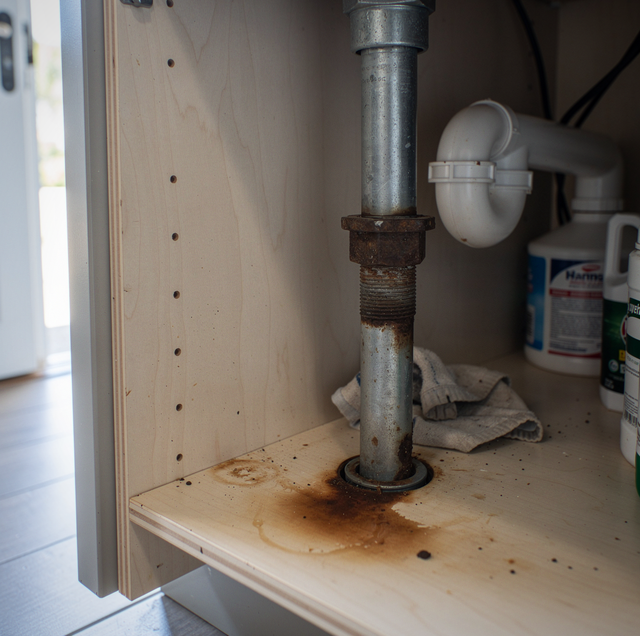
Galvanized steel pipe has a zinc coating over a steel core. The zinc protects against rust, but it wears down over decades of exposure to water, and once it's gone, the steel underneath starts corroding from the inside. That corrosion builds up as rust scale on the interior pipe wall, a process plumbers call tuberculation, narrowing the usable opening and reducing flow well before the wall itself gets thin enough to leak. Homes with older galvanized supply lines, common in aging housing stock, often show a string of small leaks across different fixtures before a section fails outright.
Copper generally holds up longer, but early or thin-wall copper piping is more prone to pitting corrosion: small points where the interior surface breaks down and eats through the pipe wall, producing pinhole leaks that can appear in more than one spot along the same run. Pitting is often accelerated by aggressive water chemistry or high water velocity through undersized lines, so once one section of a copper run has pitted, nearby sections installed at the same time are frequently not far behind.
If your plumbing includes galvanized steel or copper that's decades old, the pipe's material and age already suggest that one leak may be a preview of more to come rather than a one-off event.
Reading Leak Frequency and Corrosion Extent
A single leak in an isolated spot, with no visible corrosion nearby, is usually a fair candidate for spot repair. A pattern reads differently. If you've patched two or three leaks along the same section of pipe within a year, or if leaks keep turning up in different rooms that share the same supply run, that's corrosion working through the whole line rather than a single random failure.
External corrosion around fittings, discolored water at multiple fixtures, or a steady drop in water pressure throughout the house rather than at just one faucet all point to corrosion spread through the system rather than damage limited to one spot. Extremely hard water, common in homes on a municipal supply with high dissolved mineral content, deposits scale inside pipe walls and accelerates the buildup that narrows galvanized lines and stresses fixtures, so homes with heavy scale exposure tend to see this pattern develop sooner than homes with softer water.
Spot Repair vs. Whole-Home Repipe at a Glance
| Factor | Spot Repair Fits Better | Whole-Home Repipe Fits Better |
|---|---|---|
| Pipe age and material | Newer copper or PEX in otherwise sound condition | Aging galvanized steel or early thin-wall copper near or past its typical service life |
| Leak frequency | One isolated leak, no repair history nearby | Multiple leaks in different spots over the past year or two |
| Corrosion extent | Localized to the damaged section only | Corrosion, scale, or discoloration visible across several fixtures or rooms |
| Water pressure | Normal pressure everywhere else in the house | Gradual, whole-house pressure loss consistent with narrowing pipe interiors |
| Slab or wall exposure | Damaged section is easy to reach without major demolition | Repeated slab leaks or hard-to-reach runs where rerouting the line beats repeated excavation |
| Disruption tolerance | A short water outage at one access point | Willingness to schedule extended work in exchange for addressing the whole system at once |
| Long-term outlook | Remaining pipe expected to hold up for years | Remaining pipe shares the same age and material as the section that just failed |
The Disruption Trade-Off Most Homeowners Underestimate
Spot repair is fast because it touches one location. A section of drywall or slab is opened, the damaged pipe segment is cut out, a new coupling or short run is installed, and the opening is patched. Water to that specific line is off for at most a few hours, and the rest of the house keeps running normally the whole time.
A whole-home repipe is a bigger job by design because it replaces the supply lines serving the entire house rather than a single segment. New pipe typically gets routed through attics, crawlspaces, or interior wall cavities and drops down to each fixture, which usually means several access points rather than one, some of which get patched afterward — though runs through an attic or crawlspace often need no patching at all. Water service is interrupted at points throughout the job and restored in stages as each zone gets tied in and pressure-tested. That's a heavier lift over more days than a single-section repair, and it's the main reason homeowners hold off on a repipe until the pattern of leaks makes clear that another patch job won't hold the line for long.
Signs the System Has Moved Past Patching
A few signals, especially in combination, point toward a system-wide problem rather than a single bad section: recurring leaks in unrelated locations within a short span, a section that's already been patched once failing again nearby, rusty or metallic-tasting water after the pipes have sat unused for a few hours, a steady whole-house pressure drop that isn't explained by one fixture or the pressure regulator, visible pitting or flaking on any exposed length of pipe, and a slab leak that keeps recurring in roughly the same area even after repair.
Any one of these on its own might still be a candidate for a spot fix. Two or three together, especially in an already old system, generally mean the pipe material itself is nearing the end of its service life rather than one section being unlucky.
How to Decide Between the Two
Start with what a leak detection inspection actually finds. If it turns up one damaged section in an otherwise sound system, a spot repair addresses the real problem and there's no reason to do more. If it turns up corrosion, scale buildup, or pitting spread across multiple lines, patching the one spot you can see still leaves the rest of the system on the same path toward its next failure.
Pipe age and material set realistic expectations either way. Replacing a run of 1960s galvanized steel or pitted early copper resets that clock. A patch on the same material buys time but doesn't change what's happening inside the rest of the pipe. Weigh that against how much disruption you can absorb right now, and whether a focused repair today makes more sense than a larger project that closes the door on repeat leaks from the same underlying cause.
Frequently Asked Questions
Can a repipe be limited to just the worst section of the house, rather than the whole system?
Does a repipe replace drain and sewer lines too, or just the supply side?
How long does a whole-home repipe usually take to complete?
Will a repipe fix water pressure that's been dropping for years?
What pipe materials are typically installed during a modern repipe?
Will you have running water at all during a repipe?
A single leak doesn't automatically mean the whole system needs to come out, and a repipe isn't something to jump to on a hunch. Let the pattern of leaks, the pipe's age and material, and what an inspection actually finds guide the decision, and treat repeated patch jobs on the same section as the clearest sign that it's time to talk about replacing the line instead of fixing it again.
Schedule a leak detection inspection — find out whether your pipes need a spot repair or a full repipe before the next leak catches you off guard. Much Better Plumbing serves Las Vegas and Clark County. Call (702) 996-4760.