
Hydro-Jetting vs. Snaking: Which Clears a Stubborn Drain?
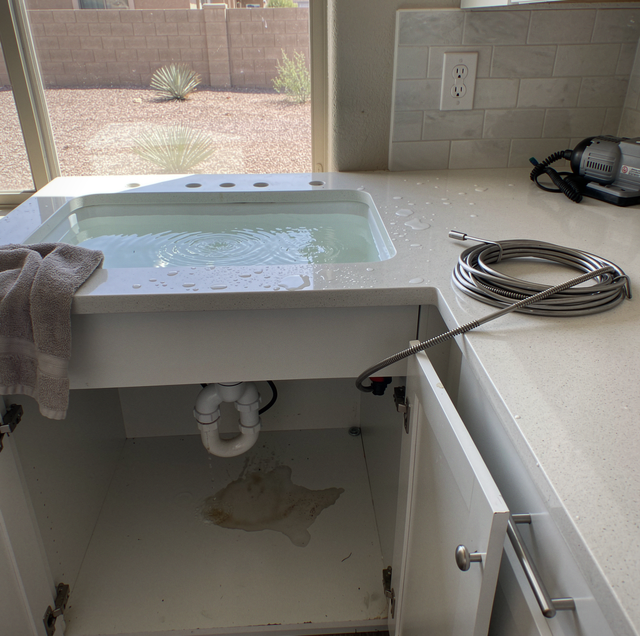
A kitchen sink drains more slowly each week until it stops draining at all. A plumber runs a cable, the water rushes through, and everyone moves on. Then six weeks later the same sink backs up again, at the same spot, in the same way. That pattern, a clog that clears and returns, is usually the first sign that the tool used to fix it and the actual problem inside the pipe were never quite matched.
Snaking and hydro-jetting both open a blocked drain, but they address different aspects of the problem. One bores a channel through whatever is in the way. The other strips the inside of the pipe clean. Knowing which one a given clog actually calls for is the difference between a fix that lasts and one that becomes a recurring appointment.
How Snaking Clears A Drain
A drain snake, also called a cable auger, is a coiled metal cable fed into the pipe through a drain opening or a cleanout. A motor on the other end turns the cable while a technician feeds it forward, and a head on the leading end, which might be a corkscrew-shaped auger tip, a spring coil, or a cutting blade depending on what's expected downstream, does the actual work once it reaches the blockage. It bores through soft material, hooks stringy debris like hair and pulls it back, or grinds through a root that has worked its way into a joint.
The cable follows the path of least resistance inside the pipe, opening a channel through the center of a clog rather than clearing the full width of the line. Once water flows again, the job reads as done, and for a one-off blockage, mostly it is. A single wad of paper towels, a toy dropped down a drain, a hairball caught at a P-trap: snaking bores through it, pulls out what it can, and the line runs clear because there was nothing left coating the walls to begin with.
How Hydro-Jetting Clears A Drain
Hydro-jetting uses a flexible hose and a specialized nozzle instead of a cable. The hose feeds into the line the same way a snake would, but the nozzle sprays water at very high pressure, both forward to cut through the blockage and backward at an angle that scours the pipe wall as the hose pulls back out. Instead of opening a single channel, the water strips grease, sludge, mineral scale, and root mass off the full interior surface of the pipe.
That distinction matters most in a line that has been narrowing gradually rather than blocked all at once. Grease from a kitchen line cools and clings to the pipe wall in layers, each pass adding a little more until the opening left in the middle is barely wide enough for water to pass. Hard water leaves mineral scale behind the same way, coating the interior of pipes and fixtures over years of use until the line's effective diameter shrinks well below what it was installed at. A cable can bore a hole through the buildup and restore flow for a while, but it leaves the coating intact along the rest of the pipe. Jetting removes the coating itself.
Hydro-Jetting vs Snaking: Side-By-Side Comparison
| Factor | Snaking | Hydro-Jetting |
|---|---|---|
| What it actually does | Bores a channel through the clog with a rotating cable head | Scours the full interior pipe wall clean with pressurized water |
| Best-suited clog types | Hair, paper products, a single lodged object, an isolated root intrusion | Grease buildup, mineral scale, sludge, sand, and widespread root mass coating the pipe |
| Cost tier | Lower — a quicker, single-point service | Higher — specialized equipment, longer service time, often paired with a camera pass |
| How often it's typically needed | Can need repeating every few weeks to months if the coating remains | Effects generally hold for a longer stretch since the buildup causing the narrowing is removed |
| Pipe-damage risk | Low on sound pipe; a cable can catch on a crack or loose joint in weakened pipe | Low when pressure and nozzle match the pipe's material; higher if an aggressive nozzle hits deteriorated pipe |
Which Clog Types Each Method Actually Handles Best
A blockage caused by a single event, hair wound around a stopper, a foreign object, a mass of wipes flushed despite the label, is a strong match for snaking. There's a discrete obstruction sitting in the line, and boring through or pulling it out solves the whole problem in one pass. The same is true for a root that has broken through one joint: a cutting head clears the intrusion at that specific point.
A clog caused by buildup that has been narrowing the pipe for months or years is a different animal. Grease coating a kitchen line, scale built up inside an older pipe, or sludge sitting along a slower-sloped section isn't a single obstruction so much as a shrinking interior diameter. Snaking that kind of line restores flow the moment it's done, but the coating on the rest of the pipe stays untouched, so the narrowing keeps building right where the snake left off. That's the clog type hydro-jetting is built for, since it removes the material lining the pipe rather than just punching through the middle.
How Often Each Method Needs To Be Repeated
The interval between service calls tends to track the cause rather than the tool itself. A kitchen line that keeps clogging with grease every couple of months because a household's cooking habits keep adding to the coating will keep needing attention on roughly that schedule no matter which method clears it, unless the coating itself gets removed. Snaking that same line clears the blockage but leaves the buildup in place, so the next clog tends to show up on a similar timeline as before. A jetted line starts from a clean interior, so it typically takes longer for enough new buildup to gather before the pipe narrows enough to clog again, though a household that keeps pouring grease down the same drain will still eventually need another jetting.
Root intrusion behaves differently. Snaking cuts through roots at a joint, and jetting can clear root mass too, sometimes with a cutting head fed through first. Either way, the roots outside the pipe remain and grow back toward the same crack over time, so an ongoing root problem usually requires periodic attention regardless of the method, unless the joint itself is repaired.
Pipe-Damage Risk: What Changes Between The Two
Snaking is generally low-risk on pipe in reasonably sound condition. The risk shows up in older or already weakened pipe: aging galvanized or early-generation copper lines that have started corroding from the inside can develop thin spots or cracks, and a cable head pushed with force against a weak point can catch, widen a crack, or, in rare cases, punch through it. A skilled technician feels for that resistance and adjusts, but it's a real consideration in older housing stock where the pipe material has had decades to corrode.
Hydro-jetting carries a different risk profile. Properly matched to the pipe's material, diameter, and condition, jetting is often gentler on the pipe over repeated use than a cable is, since the pressure spreads across the interior surface and doesn't concentrate force on one point the way a cable head can. The risk appears when the pressure or nozzle type isn't matched to the pipe: an aggressive nozzle at full pressure through pipe that's already cracked, corroded thin, or loose at the joints can widen those weaknesses instead of just cleaning around them. That's why a camera inspection beforehand matters more for jetting than for a routine snaking job, since it shows whether the pipe is a sound candidate for full-pressure cleaning or whether a lower-pressure setting is the safer call.
When A Camera Inspection Changes The Choice
For a first-time, isolated clog, most plumbers run a cable first and see whether that resolves it, since it's the quicker of the two services and often solves a one-time blockage outright. A camera inspection earns its place once a clog has recurred at the same location, since a repeat clog at the same spot usually signals buildup along the pipe wall or a structural issue, like a bellied section that a cable can bore through but never actually resolve.
The camera shows what's really inside the line: whether the walls are coated in grease or scale that jetting would strip clean, whether roots have broken through a specific joint, or whether the pipe has a structural problem, like a low spot or a crack, that neither method fixes on its own. That footage turns a guess into an informed call and flags a pipe that's too deteriorated for full-pressure jetting before the wrong setting is tried on it.
Choosing Between The Two For A Recurring Clog
A clog that clears easily and doesn't return within a normal stretch of use was probably a one-time event, and snaking alone likely solved it. A clog that keeps coming back at roughly the same interval, especially in a kitchen line, an older section of pipe, or anywhere grease or hard-water scale has time to build up, points to a coating problem that a cable can open but not remove. In that situation, the two methods aren't really competing options so much as sequential steps: a cable clears the immediate blockage so the line drains again, and jetting addresses the buildup that caused it, often in the same visit once a camera confirms the pipe can handle full-pressure cleaning.
Neither method is inherently the better tool. The pipe's actual condition decides which one applies, and sometimes the answer is both, one for each job it's built to do.
Frequently Asked Questions
How long does a hydro-jetting service typically take compared to snaking a drain?
Can hydro-jetting be used on older or more fragile pipe?
Does a drain snake ever get stuck inside the pipe?
Does the size of the pipe change which equipment gets used?
Is a camera inspection always required before either service?
Can both methods be used during the same visit?
Schedule a drain evaluation — find out whether your recurring clog needs a quick snaking or a full hydro-jetting service. Much Better Plumbing serves Las Vegas and Clark County. Call (702) 996-4760.