
How to Tell if a Leak Is Behind a Wall or Under the Floor
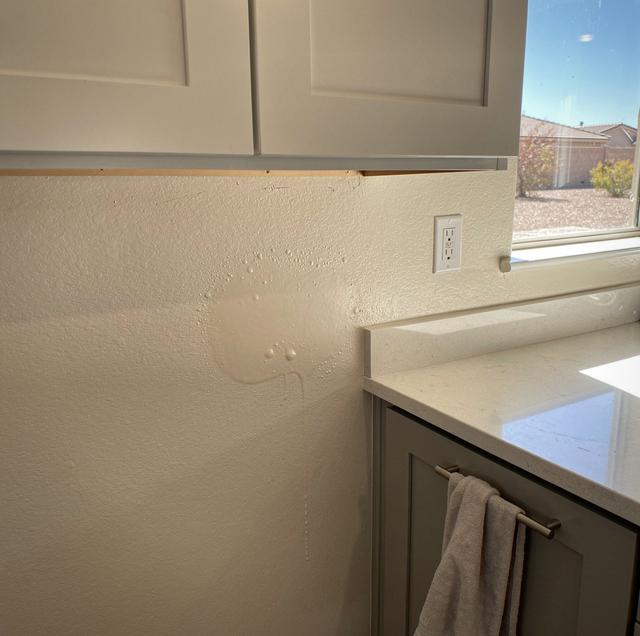
A discolored patch of drywall and a warm patch of tile are not the same problem, even though both usually trace back to a hidden supply line losing water somewhere it shouldn't. One points toward a pipe inside a wall cavity. The other points toward a line buried under the slab. Guessing wrong before anyone opens anything means cutting into the wrong surface and paying for repair work that never touches the actual leak. A wall leak and a slab leak tend to announce themselves in fairly distinct ways, and reading those signs correctly is most of the diagnostic work before a professional ever shows up with equipment.
Why Location Changes Everything About A Leak
Every hidden leak eventually reveals itself, but where it reveals itself depends almost entirely on which pipe run is failing. A supply line inside a wall cavity is surrounded by insulation, drywall, and framing, materials that hold moisture and pass it toward the nearest visible surface. A line running under a slab floor is surrounded by soil and concrete, materials that conduct heat and transmit vibration very differently from a wall cavity. That difference in path is exactly what makes the two types of leaks distinguishable without opening anything.
A contractor who opens drywall based on symptoms that actually point to a slab leak ends up staring at a drywall cavity while water keeps moving somewhere below the floor. A crew that starts breaking up flooring because a stain looked floor-related, when the source was actually a wall line running behind a baseboard, digs into concrete for nothing. Reading the signs correctly the first time keeps a repair contained to the one spot that actually needs opening.
Signs That Point To A Wall Leak
A leak inside a wall cavity tends to show up as a cluster of related symptoms concentrated on one wall, rather than scattered signs across a room.
Damp or bubbling drywall: Water trapped inside a wall cavity saturates the drywall's paper backing before it ever reaches the painted surface, so the first visible sign is often a soft spot, a slight bulge, or a section that feels cool and damp to the touch compared to the surrounding drywall.
Peeling paint or lifting wallpaper: Moisture pushing through the drywall from behind breaks the bond between the wall surface and its finish. Paint that's cracking, bubbling, or peeling in a pattern that follows a stud line, rather than peeling evenly across an entire wall, is a strong clue that water is moving through that specific section of cavity.
A musty smell tied to one wall: Trapped moisture behind drywall creates the exact conditions mold and mildew need, and the smell that results is usually strongest right at that wall and fades noticeably a few feet away. A general mustiness that spreads evenly through a room points to ventilation or humidity; a smell that gets stronger as someone walks toward a specific wall points to a cavity leak behind it.
Staining that follows a vertical or horizontal line: Water running down inside a wall cavity often leaves a stain that traces the path of the pipe or the stud bay it traveled through, producing a streak or a defined edge rather than a shapeless blotch.
Baseboard damage at the base of one wall: Because gravity pulls water down inside the cavity, baseboard trim along the affected wall often shows warping, swelling, or paint failure before the drywall above it does, since that's where the water pools before it finds its way out.
Signs That Point To A Slab Or Under-Floor Leak
A leak beneath a floor produces a different set of signs, largely because the water is moving through soil and concrete rather than a wall cavity, and because the fixture most likely to catch it first is the water meter rather than the wall itself.
Warm spots on flooring with no obvious source: A hot water line leaking under a slab heats the concrete above it, and that warmth transfers up through tile, hardwood, or even carpet as a patch that feels noticeably warmer underfoot than the surrounding floor, sometimes even without any visible moisture yet.
Unexplained water meter movement: With every fixture in the house off, the water meter should sit still. A meter dial that keeps turning, or a smart meter reading showing continuous flow with nothing running, is one of the more reliable signs of a leak in the underground supply line, since a slab leak keeps losing water around the clock regardless of whether anyone's using a fixture.
Cracks in flooring or in the foundation itself: Water escaping under a slab saturates the soil beneath it, and expansive soil that swells or shifts with added moisture can push against a foundation enough to create new cracks in tile, grout lines, or the slab itself. A crack that wasn't there before, paired with warmth or dampness nearby, is a combination worth taking seriously rather than dismissing as ordinary settling.
Sudden spikes on a water bill with no change in household usage: A slab leak often runs continuously at a low but steady rate, and that adds up over a billing cycle even though no single day looks alarming. A bill that jumps well above the normal range without any new appliance, guest, or habit to explain it is worth checking against the meter test above.
A faint sound of running water with no fixture on, or a musty smell rising from the floor rather than a wall: Some slab leaks, especially larger ones, produce a faint hissing or trickling sound audible in a quiet room near the floor. Moisture wicking up through concrete and flooring materials can also create a smell that seems to come from underneath cabinets or baseboards near the floor line, rather than concentrating at a single wall.
How Overlapping Symptoms Get Sorted Out
Some symptoms do double duty. A musty smell can appear with either type of leak, and staining along a baseboard can look similar whether the water is coming from above, inside the wall, or wicking up from below. When symptoms overlap, the sequence in which they appeared and their exact location matter more than any single sign taken alone. A stain that starts at the top of the baseboard and spreads downward suggests a wall source above; a stain, warmth, or crack that starts at the floor and appears to be spreading upward suggests a slab source below. Multiple related signs on one section of wall, without any warm floor patch or meter movement, weigh toward a wall leak. A moving meter, combined with warmth on the floor and no drywall or paint symptoms nearby, points toward a slab leak. When the signs still conflict, a shutoff check settles the question of whether there's an active leak at all: turn off the main water supply and watch whether the meter stops moving. From there, detection equipment finds the exact source.
How Professionals Narrow Down The Exact Spot
Reading symptoms gets a homeowner to a strong guess about which category of leak they're dealing with. Pinpointing the exact spot to open, rather than a general area, is what leak detection equipment is built for, and it's the step that keeps a repair from turning into exploratory demolition.
Acoustic listening equipment: A pressurized line with a leak makes a distinct sound as water escapes, even from behind concrete or drywall, and a sensitive listening device can detect that sound and help triangulate where it's loudest, narrowing a search area down to a much smaller section.
Thermal imaging: A camera that reads surface temperature differences can pick up the warm patch a hot water line leak creates on flooring, or a subtler shift on a wall surface, well before that difference is obvious to the hand or eye.
Moisture meters: These measure the actual moisture content inside drywall, flooring materials, or subfloor, giving a numeric reading rather than a guess based on how a surface feels. Moisture can travel some distance from its source before it shows up as a visible mark, so a meter reading is often more precise than the location of a stain.
Pressure testing on isolated sections of the line: By isolating segments of the supply system and testing for pressure loss on each, a plumber can confirm which line is losing water before ever cutting into a wall or floor.
Used together, these tools typically narrow a leak down to a specific section, often a couple of feet, rather than an entire wall or an entire room.
Why Guessing Wrong Costs More Than Time
Opening a wall or floor based on an incorrect guess does not just waste an afternoon. Drywall that gets cut and doesn't reveal a leak still has to be patched, textured, and repainted, an added cost that brings nothing toward fixing the actual problem. Concrete that gets broken up unnecessarily is worse: a slab cut is a bigger job to close back up, and if the guess was wrong, that section of floor gets reopened again once the mistake is corrected, plus a second cut has to be made where the leak actually is.
There's also a cost in delay. Every day a leak keeps running because the wrong section got opened is another day of seeping water damaging framing, subfloor, or the soil beneath a slab. A confirmed location, even if it requires an extra visit with detection equipment to establish, generally costs less than an exploratory cut that misses and must be repeated elsewhere.
Frequently Asked Questions
How quickly does a hidden leak usually need attention?
Can a leak be present without any visible staining at all?
Does the sound of running water always mean there's an active leak?
Is it possible for a leak to affect both a wall and a floor at the same time?
What's the difference between a leak detection visit and just opening the wall to look?
Can hard water make these leaks more likely to happen in the first place?
Whether the signs point toward a wall cavity or a slab below the floor, the goal is the same: confirm the source before anything gets opened. A damp patch of drywall and a warm patch of tile are both worth taking seriously, and matching the right diagnostic tool to the right kind of symptom is what keeps a repair from turning into more demolition than the leak itself ever caused.
Schedule a leak detection visit — pinpoint whether that leak is behind the wall or under the floor before any cutting starts. Much Better Plumbing serves Las Vegas and Clark County. Call (702) 996-4760.