
How to Know If You Have a Slab Leak: 8 Warning Signs
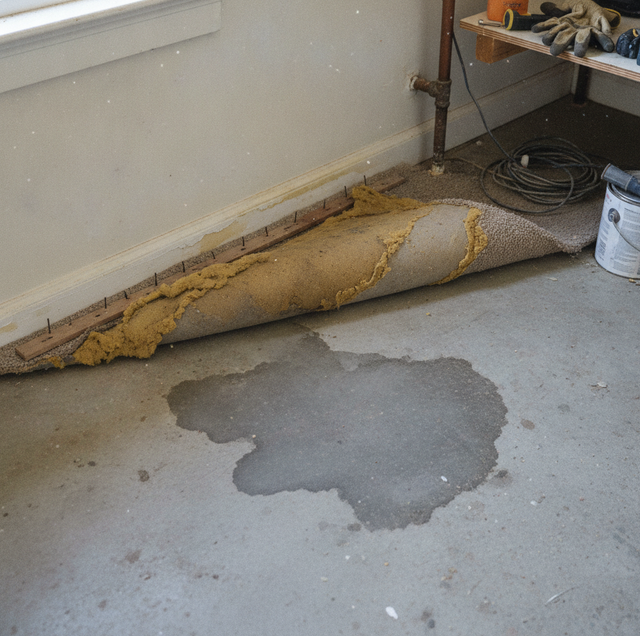
A slab leak is a leak in the pressurized water lines that run underneath your home's concrete foundation. Most homes built on a slab route the copper or PEX supply piping through or below that slab, and when one of those lines springs a leak, the water has nowhere to go but into the ground and the concrete above it. You rarely see the leak itself. You read it by the clues it leaves behind.
That hidden quality is what makes slab leaks tricky. A dripping faucet announces itself; a pinhole in a line buried under four inches of concrete does not. So the question "do I have a slab leak?" is really a question about reading symptoms, and the symptoms are surprisingly readable once you know what they point to.
Why a Slab Leak Hides Instead of Dripping
Think of your supply lines the way you'd think of a garden hose left running under a pile of dirt. You wouldn't see the water, but the hose is still pushing it out under pressure the whole time, soaking everything around it. A slab leak works the same way. The line stays pressurized around the clock, so even a pinhole releases water continuously, day and night, running with a fixture open or with the whole house quiet.
Because the water drains down into the soil and up into the concrete rather than pooling on a surface, the damage builds quietly for weeks or months before anything obvious shows. That's why the early warning signs matter so much. They're your only look at a problem the concrete is doing its best to hide.
The Warning Signs, and What Each One Tells You
No single sign is proof on its own. But when two or three of these line up, a slab leak moves from "possible" to "likely."
A sudden, unexplained high water bill- This is often the first thing homeowners notice. If your usage habits haven't changed and no one has added a pool or a new tenant, a bill that climbs noticeably usually means water is leaking somewhere you can't see. A slab leak fits that pattern exactly, because the water leaves through the meter but never reaches a fixture.
The sound of running water when everything is off- Turn off every tap, the dishwasher, the washing machine, and the ice maker, then stand in a quiet room and listen. A faint hiss or trickle from the floor or a wall base is a classic slab leak signature. You're hearing pressurized water forcing its way out of the line.
A warm spot on the floor- This one is specific and useful. If the leak is on the hot-water line, heated water pools under the slab and warms the concrete above it. You may feel a patch of tile or laminate that's noticeably warmer than the surrounding floor, sometimes warm enough to feel through socks. A warm spot points to a hot-line leak. A cold-line leak produces no warm spot at all, which is one of the main ways a plumber narrows down where to look.
Damp, warped, or discolored flooring, or a musty smell- As moisture wicks up through the slab, it lifts laminate, cups hardwood, loosens tile grout, or darkens carpet in one area. A persistent musty or earthy odor near a specific spot signals moisture and, before long, mold taking hold in the pad or subfloor.
Low water pressure- When water bleeds out of a supply line before it reaches your fixtures, the pressure that arrives at the tap drops. If your shower and faucets have gone weak across the house without an obvious cause, a leak on the pressurized side is one explanation worth ruling out.
A water heater or recirculation pump that runs more than it used to- A hot-line slab leak drains heated water continuously, so the water heater keeps firing to reheat a tank that never stays hot, and hot water at the tap runs out faster than it should. If you have a recirculation pump, it may cycle more often for the same reason.
Cracks in the floor or walls, or a slab that feels like it's shifting- Over time, escaping water erodes and destabilizes the soil supporting the foundation. As that support shifts, you can see new cracks in the slab, in floor tile, or in drywall, and doors that suddenly stick. This is a later-stage sign and a serious one.
The meter's leak indicator is spinning with all fixtures off- Most water meters have a small flow dial or a triangular leak-detection indicator. If it's moving while nothing in the house is running, water is flowing somewhere on your side of the meter. That's the closest thing to a definitive at-home test, and it's worth doing carefully.
The Water-Meter Test, Step by Step
You can run a meaningful check yourself without any tools. Shut off every water-using fixture and appliance in the house. Go to your water meter, usually near the street or in a box at the front of the property, and note the exact reading along with the position of the flow dial or leak triangle. Wait 30 to 60 minutes without using any water, then read the meter again.
If the numbers changed or the leak indicator moved, water is escaping somewhere on the supply side. That doesn't yet prove the leak is under the slab rather than in a wall or the yard, but it confirms you have a real, active supply leak worth investigating. To narrow it further, close the cold-water inlet valve on your water heater and repeat the observation. If the meter stops moving once the heater is isolated, the leak is on the hot side; if it keeps moving, the leak is on the cold side.
Hot-Line Versus Cold-Line: Reading the Difference
Distinguishing the two saves a lot of guesswork. A hot-line leak tends to announce itself with a warm spot on the floor, hot water that runs out unusually fast, and a water heater that works overtime. A cold-line leak gives you none of that warmth. It still shows up as a high bill, running water sounds, damp flooring, and a spinning meter, but the floor stays at a normal temperature.
That's why a warm spot is such a helpful clue, and also why its absence doesn't clear you. Plenty of slab leaks are on the cold line and never warm the floor at all.
Why It Matters to Catch It Early
A slab leak doesn't stay the same size. The constant flow erodes the soil under and around the foundation, and once that support gives way unevenly, the slab can crack and settle, which is far more expensive to correct than the pipe itself. The trapped moisture also feeds mold in the flooring, padding, and baseboards, creating an air-quality problem on top of a structural one. Every week, a slab leak runs, wasting water you're paying for and causing more damage to the surrounding house. Early detection is the real difference between a contained repair and a foundation problem.
How a Plumber Finds and Fixes It
Confirming symptoms is one thing; pinpointing the exact leak under concrete is another, and it's where professional equipment earns its keep. A plumber typically starts with acoustic listening gear that amplifies the sound of water escaping the line, then confirms an active loss with a pressure test that isolates a section of pipe and watches for a drop. A thermal camera can map the warm signature of a hot-line leak through the floor, and line-tracing tools follow the pipe's path so the leak's location is marked before anyone touches the slab. The goal is to know exactly where the leak is, so the fix is precise rather than exploratory.
Repair options generally fall into three approaches. A spot repair opens the slab at the pinpointed location, exposes the damaged section, and replaces it, which works well for a single isolated leak. A reroute or bypass abandons the bad line under the slab and runs a new line overhead through the wall or attic instead, avoiding concrete work entirely. A full repipe replaces the aging supply lines throughout, which makes sense when the piping is old enough that one leak is likely the first of several. Which approach fits depends on the pipe's age, the leak's location, and how many problems the system is showing.
Why Slab Leaks Happen in the First Place
Two forces do most of the damage to buried copper. The first is water chemistry. Very hard water carrying a heavy mineral load can pit and corrode copper from the inside over the years, thinning the wall until a pinhole opens. The second is friction: where a copper line rubs against the concrete or a piece of rebar as the house expands, contracts, and settles, the pipe slowly abrades a weak spot until it fails. Soil movement adds to both, because expansive soils swelling and shrinking with moisture put steady stress on rigid lines and encourage that rubbing. Homes on slab foundations with older copper piping sit right in the middle of all three factors.
A Safety Note Before You Grab a Tool
It's tempting to want to find and fix a slab leak yourself, but this is one to hand off. Do not jackhammer into your own slab chasing a leak. Guessing at the location means tearing up concrete in the wrong place and possibly striking another line, and cutting into a slab without pinpointing the leak first can turn a small repair into a large one. There's also a real electrical hazard: supply lines can run near conduit under the slab, and water plus electricity in an enclosed space is dangerous. Detection and repair belong to a professional with the equipment to locate the leak precisely and the training to open the slab safely.
If the signs above are pointing you toward a slab leak, the smart next step is a professional diagnosis before the water does more damage than the pipe.