
Toilet Running Long After You Flush? Here's What Fails
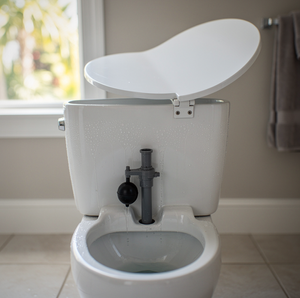
A toilet is supposed to run for a short stretch after every flush, then go quiet. When it keeps running well past that, in a hiss, a trickle, or a full refill sound that repeats every few minutes, the tank has a specific part that isn't doing its job, and finding which one comes down to a short checklist. The tank holds only a handful of moving parts, and a running toilet traces back to one of them, or to the seat or tank they sit in.
Before anything else, pull the tank lid off and look at these parts, in this order:
- Water level against the overflow tube: The waterline should sit at the fill mark inside the tank, below the rim of the open overflow tube, not level with it or spilling into it. If it sits right at that rim, the tank is overfilling.
- The float: This is the ball or cup that rides the water level and tells the fill valve when to stop. Check where it sits and whether it moves freely on its rod or its rail.
- The flapper: The rubber or plastic disc that seals the tank's drain opening should sit flat and centered on its seat once the flush finishes. Look for warping, a rough edge, or a ring of buildup where it meets the seat.
- The chain: It should run from the flush lever down to the flapper with a small amount of slack, not tight and not tangled.
- The fill valve: This is the taller assembly at one side of the tank. Watch it after a flush: it should push water in fast, then cut off cleanly once the float rises.
- The refill tube: A thin tube runs from the fill valve down into the overflow tube's opening. It should clip onto that opening above the waterline, not hang down inside it.
A worn seat or a cracked tank sits behind these parts and is covered last.
What a Normal Refill Looks Like
Every flush drains the tank, and the fill valve's only job is to refill it and then stop. As the float drops with the water, it opens the valve. Water rushes back in through the valve and, on fill valves fitted with one, also runs down the thin refill tube into the overflow tube to top off the bowl. As the tank refills and the float rises with it, the float closes the valve once the water reaches the height it's set for, landing under the rim of the overflow tube rather than into it. The cycle finishes, and the tank goes silent, and it stays that way until the next flush.
A toilet that runs long after that window has one of two problems: either the valve isn't shutting off when it should, or water is escaping the tank somewhere else, which forces the valve to keep replacing it. Everything below traces back to one of those two.
A Flapper That Doesn't Seal
The flapper is a simple hinge and seat, but it does one demanding job. It has to swing open wide enough to dump the whole tank in seconds, then drop back down and seal a hole under the pressure of standing water until the next flush. Anything that keeps it from closing flat- a warped edge, a stiff hinge, or a chain caught underneath it- lets tank water leak past it into the bowl in a slow, continuous trickle.
That leak is easy to miss because it doesn't look like running water.
In a home with very hard water, mineral scale collects on the exact surface that has to seal flat against the flush-valve seat, and a scaled ring under the rubber is what keeps the flapper from closing all the way, even when the flapper itself isn't worn out. A home on softer water builds little of that ring, so the same flapper holds its seal without that added source of wear. When the seat is scaled, the ring is cleaned before a new flapper is installed, since a fresh flapper pressed onto the same crust leaks the same way; a warped or stiff flapper is replaced.
The Fill Valve That Doesn't Shut Off
If the flapper seals fine and the water level in the tank still looks high, or the valve itself keeps hissing softly instead of cutting off clean, the fill valve is the more likely culprit. Inside the valve body is a washer or a diaphragm that seats against a small opening to stop the flow. Grit, a worn washer, or a pitted seat keeps the seal from closing all the way, so a thin stream bypasses it even after the float has told the valve to stop.
That failure shows up as water running into the overflow tube in a steady trickle you can watch and hear, even though the flapper below sits perfectly still. It's a different sound from a flapper leak, closer to a constant, faint hiss than to a periodic refill cycle.
Scale buildup plays the same role here as it does at the flapper. In very hard water, mineral deposits collect on the fill valve's internal seat and washer, just as they ring the flapper seat. That buildup can keep the seal from closing fully even when nothing else about the valve has failed. Where the water isn't hard, that seat and washer collect little of that buildup.
Once the tank refills, close the supply stop at the wall, pencil the waterline, and check it an hour later without flushing. A line that drops points to the flapper or seat; one that holds points to the fill valve.
Float Height and the Overflow Tube
A float set too high tells the fill valve to keep filling past the point where the tank should shut off, and once the water reaches the overflow tube's opening, it spills over the edge and drains straight down into the bowl. From the outside, that looks and sounds like a toilet that won't stop running, but the cause has nothing to do with a worn seal. The valve is doing exactly what the float tells it to do; the float is just set wrong.
On a ball-and-arm float, the fix is to bend the arm down slightly or turn the adjustment screw where the arm meets the valve. On a float-cup style, a clip on the fill valve's shaft slides up or down to lower the shutoff point. Either way, the target is the same: the waterline should sit below the overflow tube's rim, not level with it or above it.
Chain Length and the Flush Handle
The chain connecting the flush handle's arm to the flapper has a narrow window that works. Too much slack and the chain can slip off the arm entirely or fall to one side and wedge itself under the flapper's edge when it drops, holding the flapper open just enough to leak. Too little slack, and the flapper can't fully seat because the chain holds it up a hair off its seat, producing the same slow trickle as a worn flapper, even though the flapper itself is fine.
A sticking handle causes a related but separate problem. If the lever doesn't spring back up on its own after a flush, the arm stays down, the chain stays taut, and the flapper stays lifted off its seat instead of dropping back into place. That looks like a bigger leak than a chain problem on its own causes, because the flapper is being held fully open rather than just slightly lifted.
When the Tank or the Valve Seat Is the Problem
The flapper, the fill valve, the float, and the chain are where a running toilet begins, and all four are things you can inspect, adjust, or swap yourself. The problem can also sit one layer deeper: the flush-valve seat itself, the ring the flapper presses against, can pit, crack, or wear unevenly enough that no flapper, new or old, seals against it properly. A cracked tank, a loose tank-to-bowl connection, or a fill valve that has failed internally beyond simple adjustment falls into the same category.
That's the point where swapping parts stops solving it and a plumber's diagnosis is worth calling in: a bad valve seat is fixed with a seat repair kit or a new flush valve, and the flush valve comes out only with the tank off the bowl.
Frequently Asked Questions
How do I tell if it's the flapper leaking or the fill valve running?
Reach into the tank and press the flapper firmly down onto its seat with a finger. If the running or hissing stops right away, water was leaking past the flapper into the bowl. If it keeps going even with the flapper held shut, the fill valve itself isn't cutting off.
What is the CL mark on a fill valve for?
It marks the critical level, the height the valve has to stand at so tank water can't be siphoned back into the supply line. That mark should be above the overflow tube's opening, while the waterline stays below it, so a CL mark at or below the overflow rim means the valve is mounted too low.
Why does my toilet sometimes run on its own hours after the last flush?
That pattern, sometimes called a ghost flush, occurs when a flapper or seat leak causes the tank to slowly lose water until the float drops low enough to trigger the fill valve, which then runs briefly to top it back off. It repeats on its own schedule even when no one is near the toilet, despite there being no visible drip.
Does it matter if the refill tube slips down into the overflow tube?
Yes. The refill tube is meant to clip onto the rim of the overflow tube, delivering its water above the waterline. If it slides down below the water's surface instead, it can start acting as a siphon, continuously pulling tank water down into the overflow tube and out to the bowl even when the flapper and fill valve are both working correctly.
Can a running toilet cause any damage besides raising the water bill?
Beyond the bill, a toilet that runs for days wears the fill valve's seal against a constant flow rather than the brief contact a normal cycle provides, and on hard water it keeps feeding fresh mineral to the seat and the flapper edge the whole time it runs.
Should I try adjusting the fill valve first, or just replace it?
An adjustment is worth trying first if the float height or water level is obviously off, since it takes only a few minutes. If the valve still won't shut off cleanly after adjusting it, or the internal seal is visibly pitted or scaled, a full valve replacement is quicker than sourcing and fitting a rebuild kit for an older ballcock-style valve. It replaces every wearing part at once.
Arrange a toilet repair visit — the flapper, fill valve, float, or seat that keeps your tank running is found and repaired or replaced. Much Better Plumbing serves Las Vegas and Clark County. Call (702) 613-8452.