
Why Can't You Just Swap a Shower Handle for a Different One?
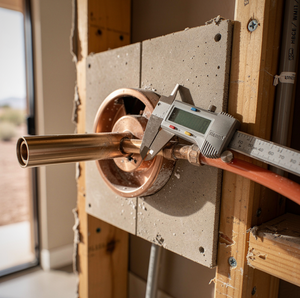
A shower handle looks like the simplest fixture in your bathroom to replace. Pull the old lever off, buy a shiny new one in a finish you like, and thread it back on some Saturday afternoon. That confidence sends plenty of eager homeowners straight to a hardware store aisle holding a handle, and it backfires often enough that plumbers hear about it weekly.
Behind that handle sits a valve body and a cartridge, and what actually decides whether your new handle will work has almost nothing to do with the handle itself. This article walks through why the trim you see and the valve behind it must match, what happens when they don't, and where the final call on your bathroom valve actually belongs.
The Shower Trim Kit Is Not the Valve Body
What you hold in your hand when you unscrew a shower handle is just one component of what plumbers call the shower faucet trim. It includes the handle, the escutcheon plate covering the wall opening, the control knobs on models with more than one, and often the showerhead and arm. All of it sits in front of the wall. None of it is the valve.
The valve itself lives inside the wall, connected to the hot and cold supply lines and the shower riser. It mixes water to temperature and controls flow, and the handle's only job is to turn that valve's internal cartridge. A handle that looks perfect can still be useless if the cartridge behind it does not match what the handle was built to grip.
Why Shower Cartridges Don't Cross Brands
Every valve manufacturer builds its cartridge to a shape only that brand's handles are made to grip. One manufacturer's cartridge uses a round stem with its own spline pattern; another maker's valve uses a different broach shape entirely; a third manufacturer's cartridge differs again. A new handle bought to match your tile still has to clamp onto whatever stem is behind your wall, and a stem built for one platform will not grip a handle built for another, however similar the two look on a shelf.
Force a mismatched handle onto the wrong stem and one of a few things happens: it wobbles instead of turning smoothly, it grips only part of the stem and slips under water pressure, or it never seats far enough to reach the shutoff position. None of that shows up on a shelf. It shows up after installation, once the water behind the wall is running and the only thing separating a shower you can trust from a leak is whether the internal shapes matched.
Before buying a replacement handle, remove the old one and photograph the cartridge stem. Count the flats or splines, measure the stem's width in millimeters, and note the brand name stamped on the valve body underneath the trim plate.
What Slips When a Universal Trim Kit Goes On Anyway?
Hardware stores sell trim kits marketed as a universal fit, and the label is not lying about the part it covers. The escutcheon plate and handle shell adjust enough to hide almost any wall opening behind a clean cover. What a universal kit rarely claims, if you read the fine print instead of the front of the box, is that the cartridge inside will actually operate the valve behind the wall.
What actually slips is the part nobody can see once the tile is dry and the new handle turns easily in your hand. A universal kit's adapter sleeve can grip an incompatible stem just enough to turn the water on and off, without ever forming the tight seal the original cartridge relied on to control temperature and pressure precisely. Water can weep past that loose connection, a few drops at a time, into the wall cavity rather than onto the bathroom floor. Weeks pass before a warped baseboard or a soft patch of drywall in the next room gives away that anything is wrong, by which time fixing the mismatch means opening a wall a matched cartridge would never have touched.
None of that means a new handle is a bad idea; it means the compatibility question needs an answer before you buy, not after tile is dry and grout has cured around an escutcheon plate. A plumber can answer that in minutes with a look at the cartridge stem or a call to whoever installed the valve.
What Slips First When an Older Rough-In Meets a New Shower Handle?
Brands also redesign their own cartridges over time, so a valve installed a decade ago in a typical older home might use a stem shape the same manufacturer no longer builds a matching handle for. Extremely hard water, the kind that leaves a chalky white film on shower glass and chrome, coats components with mineral scale faster than softer water ever would, pushing valves toward replacement and widening the gap between what a store shelf carries today and what sits behind an older wall.
What slips first in these older installations is rarely the whole valve at once. A homeowner buys a same-brand replacement handle expecting an easy match, only to find the broach pattern was updated two or three product generations ago and the new part will not seat on the old stem. A plumber who works with obsolete platforms daily usually knows whether an adapter cartridge exists for that specific generation or whether the valve body itself has reached the point where sourcing parts costs more effort than the swap is worth.
Rebuild or Replace: The Valve-Body Decision That Matters
A shower valve that is leaking, dripping, or hard to turn can sometimes be rebuilt without a full replacement, since a worn washer, O-ring, or cartridge is often all that failed inside an otherwise sound valve body. That is not true every time. Extremely hard water can build up a crust of mineral deposits inside the valve body itself, until the housing is too pitted and worn to hold a new cartridge properly; at that point, a full replacement behind the wall becomes the only option.
None of this is something you can settle by looking at the handle in a showroom. Only a plumber who has opened the wall plate and looked at the valve body, checked for scale, pitting, or a cracked housing, and tested the cartridge seat can say which side of that line a particular shower falls on. Two valves that look identical from the tile side may require different repairs once the cover plate is removed.
Shower valves also differ by type: a pressure-balancing valve and a thermostatic valve are built differently inside, so no trim kit can turn one into the other.
When a Trim Swap Is Only Cosmetic
Not every trim swap involves a failing valve. Sometimes a homeowner simply wants a different finish or a newer style, and if the existing valve body and cartridge are still sound, matching a new handle to that exact same platform gives the shower area a fresh look without touching anything behind the wall.
Matching the platform is the whole trick. A plumber can usually confirm it by the model stamp on the valve body, visible once the old escutcheon plate comes off, or by the cartridge's part number etched into its base. That single check keeps a cosmetic update simple and stops it from turning into a bigger job nobody planned for that afternoon.
Either way, the identification step belongs to whoever actually opens the wall plate, not to whoever is standing in the aisle comparing finishes. A plumber who can name the platform behind your tile, confirm the state of the valve body, and match or source the right cartridge is the person carrying that responsibility, and that is exactly who a shower handle question of any kind should go to first.
Frequently Asked Questions
A universal kit's escutcheon plate adjusts to cover openings of several different sizes and shapes, but that only hides the gap around your valve. It says nothing about whether the cartridge will turn your valve, something a plumber can tell you after your trim plate comes off.
Not reliably. Manufacturers sell replacement handles in finishes that rarely match their own original hardware, and aftermarket handles copy popular finishes regardless of brand. Your valve's actual brand is usually stamped on the body itself, visible only after you remove the handle and escutcheon plate.
Yes, during a full remodel, a plumber can remove your old valve and install a different brand, since the wall is open and the supply lines are exposed. That is a bigger job than a trim swap, because it means cutting into your tile to reach the valve body, not unscrewing a handle you can see.
Manufacturers redesign their own cartridges over the years, often changing the broach shape or the prefix stamped on the cartridge base, without renaming the product line. A handle you buy today can outlive the cartridge generation it was built for. If your valve is old enough, a handle carrying the same brand name may not seat on the stem behind your wall.
No. A leaking handle often traces back to a worn cartridge, a failed O-ring, or a loose retaining nut, any of which a plumber can replace without touching the valve body. Hard water moving through a home's plumbing eventually damages some valve bodies beyond repair, but that is the exception, not the starting assumption, and only a plumber can tell you which case yours is.
First, a plumber carefully removes your old trim and reads the stamp on your valve body to identify the platform. Aftermarket cartridges are available for many popular older platforms from multiple manufacturers, so a direct manufacturer match is not always required. When no compatible cartridge is available anywhere, replacing the entire valve behind your tile becomes the only option, and a plumber checks whether an access panel in an adjacent closet or wall allows that without cutting your tile at all. Either way, you get an answer before any wall gets opened for real.
Schedule a shower valve inspection — find out whether your leaking or hard-to-turn handle just needs a matched trim kit, a rebuilt cartridge, or a full valve replacement behind the wall before you buy a single part. Much Better Plumbing serves Las Vegas and Clark County. Call (702) 613-8452.